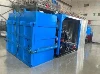
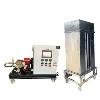
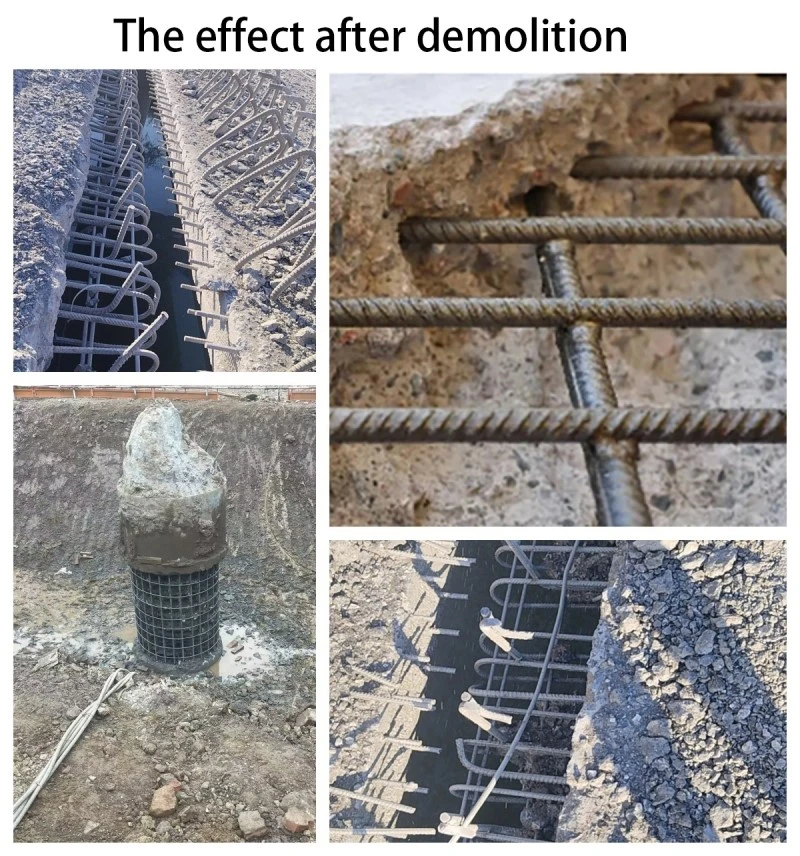
High-pressure water jet concrete demolition (also known as hydro demolition) is an advanced construction technology that utilizes ultra-high-pressure water jets to statically, coldly, and without vibration demolish concrete. The system uses an ultra-high-pressure plunger pump to pressurize ordinary tap water to 1000–2800 bar, forming a supersonic water jet through a specialized nozzle. This jet impacts and breaks up the concrete, precisely removing damaged concrete while preserving the reinforcing steel and main structure. It is widely used in bridges, tunnels, building reinforcement, municipal engineering, and industrial demolition.
II. Working Principle
1. A power unit drives an ultra-high-pressure plunger pump to pressurize water to ultra-high pressure.
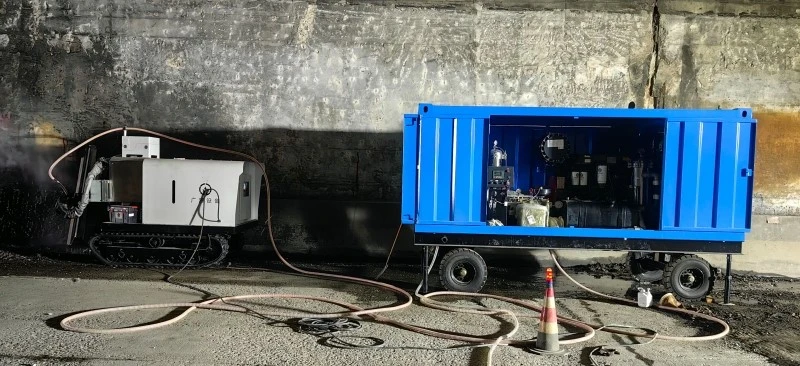
2. The ultra-high-pressure water is delivered to an intelligent demolition robot through a high-pressure hose.
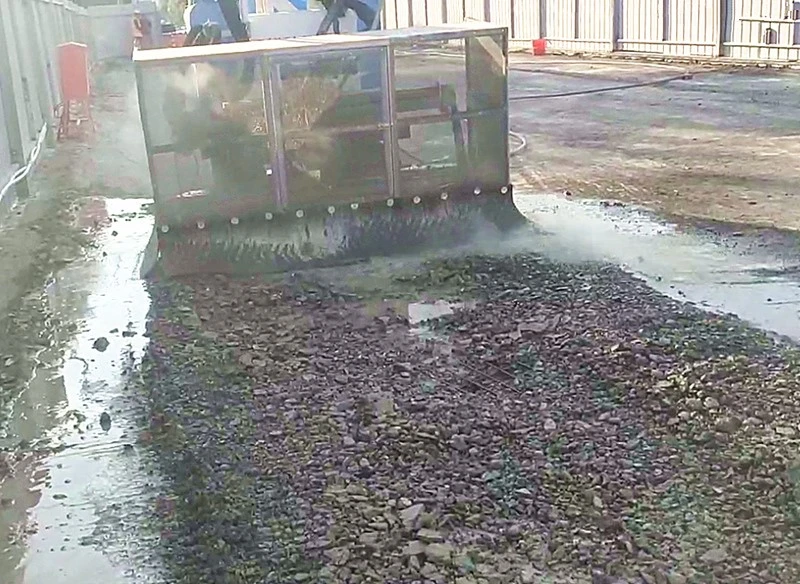
3. The demolition robot, following a precisely programmed sequence, drills the water jet into the pores and micro-cracks of the concrete, generating internal water pressure.
4. When the pressure exceeds the tensile strength of the concrete, the concrete collapses and falls.
5. The reinforcing steel is dense and impermeable to water and is not damaged by the water jet, achieving selective demolition.
III. System Components
1. High-Pressure Pump Set
2. High-Pressure Hose
3. Tracked Demolition Robot (For Large-Area, High-Efficiency Operation)
IV. Advantages of the High-Pressure Water Jet Concrete Demolition System
1. Vibration-Free and Structure-Free: Pure hydraulic operation, no impact, no vibration, no micro-cracks, no damage to reinforcing steel or existing structure, particularly suitable for reinforcement, repair, and expansion projects.
2. Precise and Controllable, Selective Demolition: Allows precise control of demolition depth and range, removing only damaged areas while preserving intact sections, avoiding excessive demolition and reducing rework and material waste.
3. Dust-Free and Environmentally Friendly: Using water as the medium, it produces zero dust, low noise, no exhaust gas, and no sparks, meeting the requirements of urban areas, residential areas, and construction sites with strict environmental regulations.
4. Excellent Interface Quality, Strong Bond Between New and Old Concrete: After demolition, the surface is rough and uniform, forming a natural high-bonding interface. The high bonding strength between new and old concrete significantly improves the quality and durability of the reinforcement project. 5. High construction efficiency and short construction period: High-flow, high-pressure models are 10-30 times more efficient than pneumatic drills and hydraulic breakers, suitable for rapid demolition of large areas and high-strength concrete.
6. High safety and wide applicability: Cold-state operation, no open flame, no explosion risk, suitable for special environments such as explosion-proof areas, confined spaces, tunnels, underwater, nuclear power plants, and chemical plants.
7. Reduced overall costs and extended structural lifespan: Does not damage main reinforcement or cause internal structural damage, reducing the risk of later cracking and leakage, resulting in lower long-term maintenance costs.
8. Low labor intensity: Robotic automation significantly reduces manual labor intensity, resulting in a clean, safe, and standardized site.
V. Scope of Application
Bridges: Removal of bridge deck pavement, repair of pier defects, reinforcement of box girders;
Tunnels: Treatment of secondary lining defects, section trimming, waterproofing base treatment;
Buildings: Partial demolition and reinforcement of shear walls, floor slabs, beams and columns;
Municipal Engineering: Repair of airport runways, subway structures, and utility tunnels; treatment of highway expansion joints;
Industrial Engineering: Cleaning of equipment foundations, explosion-proof areas, storage tanks, and reactors.