High-pressure cleaning is a crucial component of equipment maintenance and overhaul operations in modern chemical enterprises. Today, let us briefly explore how high-pressure cleaning operations are conducted.
High-pressure water jet cleaning involves forcing pressurized water through a nozzle at high speed to create a water stream characterized by high velocity, high energy, and strong penetrating power. Its immense impact and shear forces effectively remove various types of dirt, rust, grease, and other stubborn deposits.
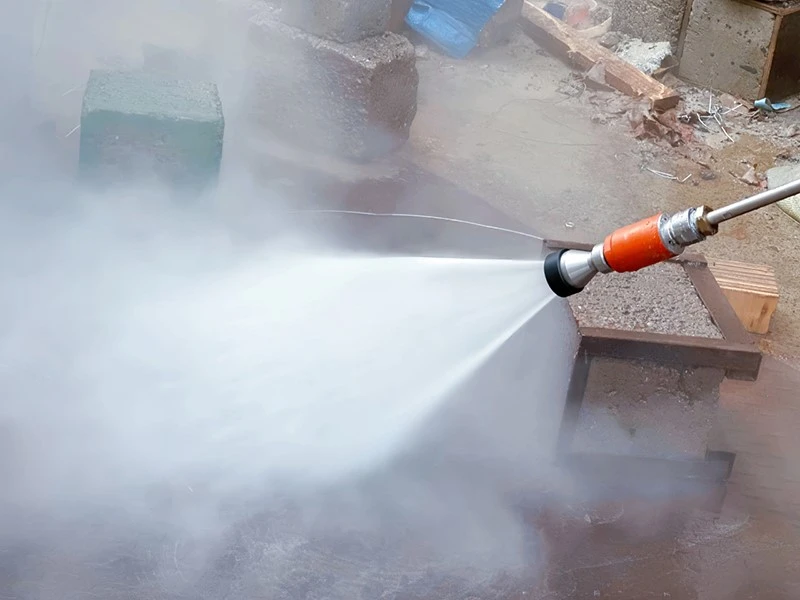
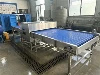
High-pressure cleaning is widely used in the chemical industry, primarily due to its efficiency, environmental friendliness, and non-corrosive nature; it is well-suited for the complex operating conditions and strict cleanliness requirements associated with chemical equipment. Key applications include the cleaning of reaction vessels, heat exchangers, pipelines, and storage tanks, as well as paint and rust removal. The entire operation relies on a complete high-pressure water jet cleaning system.
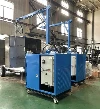
The core components of this system typically include the following:
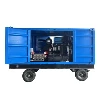
The high-pressure pump is the heart of the system, responsible for pressurizing water to the required level; a reciprocating plunger pump is commonly used for this purpose. As the plunger moves outward, the internal chamber volume increases, opening the inlet check valve while the discharge check valve remains closed. External fluid enters the pump chamber through the suction valve; as the plunger continues to move, the internal volume reaches its maximum, and the suction valve closes to prevent backflow. When the plunger reverses direction and pushes inward, the chamber volume decreases, causing the pressure to rise. At this point, the discharge valve opens while the suction valve remains closed, forcing the high-pressure water into the discharge pipeline. This cycle repeats continuously-driven by a crank-and-connecting-rod mechanism that facilitates reciprocating motion-enabling the steady intake and discharge of high-pressure water. By controlling the frequency and stroke of the reciprocating motion, the pump's output flow rate can be regulated. This flow remains relatively stable and is generally independent of the working pressure, determined instead by the plunger's displacement volume and the number of strokes. Due to features such as easily adjustable high-pressure output, these pumps are widely utilized in chemical cleaning equipment.
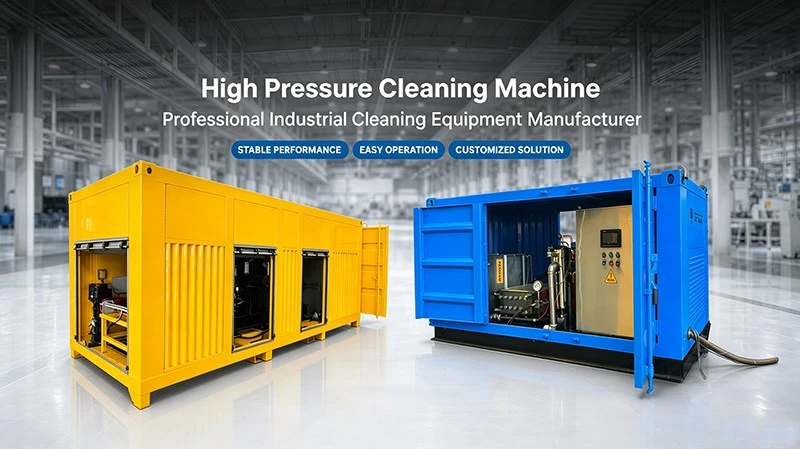
The power system driving the high-pressure pump is typically either an electric motor or a diesel engine; the choice depends on the specific application and whether mobility is required. Both electric and diesel-driven cleaning units have distinct advantages and disadvantages, making them suitable for different scenarios. Electric drives produce no exhaust emissions, operate quietly, and generally have lower initial and long-term costs; they are relatively easy to maintain and repair but require a stable power supply. Diesel-driven units offer excellent portability, allowing for use in any location, and typically provide higher torque, making them ideal for heavy-duty tasks. However, they generate significant noise and vibration during operation and entail higher long-term operating costs compared to electric motors.
The water supply system provides a clean, steady flow of water to the equipment and consists of components such as filters, booster pumps, water tanks, and supply lines. Routine maintenance involves cleaning or replacing filters; the pump assembly typically utilizes cartridge-style bag filters or cartridge filters. Selecting the appropriate filter is crucial for ensuring clean water supply, stable flow, and safe equipment operation.

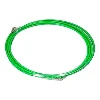
Additionally, the high-pressure water lines feature a specialized construction-comprising an inner polyethylene liner, an intermediate layer of braided steel wire, and an abrasion-resistant rubber outer layer-designed to withstand high pressure. Wire-wound high-pressure hoses generally outperform braided hoses, with the number of steel wire layers serving as the critical parameter for pressure resistance. Hoses must undergo pressure testing at a minimum of 1.5 times the working pressure and pass a holding test lasting at least 30 minutes before being deployed for field use.
The lubrication system provides essential lubrication to the high-pressure pump's moving parts, thereby reducing wear and extending the equipment's service life. It typically includes components such as an oil pump, heat exchanger, oil filter, and pressure/temperature monitoring devices. The heat exchanger transfers heat to the water supply system to maintain optimal oil temperatures.
The high-pressure gun and foot-operated control valve are the components directly operated by cleaning personnel. Both utilize an overflow design; during pauses in cleaning operations, they release pressure from the discharge line through a large-bore outlet, thereby protecting personnel and equipment while minimizing wear.

The nozzle is a critical yet often overlooked component of the system that directly influences cleaning performance; it is the key element responsible for converting water pressure into a high-speed water jet. When a high-pressure water stream passes through a nozzle, the nozzle's shape and diameter directly influence the flow velocity. Increasing the operating pressure accelerates the water flow, thereby enhancing the impact force of the jet. Selecting the optimal combination of nozzle diameter and pressure is crucial for cleaning efficiency; higher pressure is not always better. Once the pressure exceeds the threshold required to break down the grime, further increases yield diminishing returns in efficiency while placing an excessive burden on the system equipment. Proper operation involves ensuring the pressure meets the threshold for breaking down the grime, then increasing the water flow rate to achieve both efficient and safe cleaning results.
Regarding the selection of nozzle orifice direction and quantity, forward-facing jets generally offer superior cutting and destructive power. Conversely, rearward-facing jets provide better propulsion and debris-clearing capabilities. Removing hard, compacted deposits requires more forward-facing orifices paired with a rigid lance. For loose debris in pipes with many bends, however, more rearward-facing orifices are preferred to ensure the continuous advancement of a flexible high-pressure hose.
Finally, let's briefly introduce a few special types of water jets beyond the common continuous stream. Abrasive water jets combine traditional high-pressure water jet technology with abrasive particles. By introducing hard abrasives-such as quartz sand-into the high-pressure stream, the jet's impact force is vastly increased, enabling it to break down various types of hard deposits.
Cavitation water jets utilize specially designed nozzles to generate an intense cavitation effect: tiny bubbles form within the water stream and collapse upon contact with the target surface, releasing energy that impacts and cleans the material. This method is particularly well-suited for applications such as surface abrasion, paint removal, and underwater operations.