Hydro-jetting (or water jetting) is a process that uses high-pressure water streams to clean surfaces.
High-flow water jetting is a variation of this process; while it also utilizes high-pressure water, the flow rate is significantly higher than that of standard, conventional hydro-jetting. This makes it an ideal choice for large-scale projects that require greater cleaning power and higher energy output.
If you are considering using high-pressure water jetting for your next project, here are some key aspects you should know.
What Is High-Pressure Water Jetting?
Hydro-jetting is a process that employs high-pressure water streams to remove stubborn deposits and grime from various surfaces and bulk storage tanks.
It is an excellent method for cleaning industrial equipment, such as heat exchangers, boilers, reactors, and storage tanks.
Applications involving lower pressures and flow rates-often used for cleaning buildings, vehicles, and certain types of ground surfaces-are commonly referred to as pressure washing or power washing.
In high-pressure water jetting, the water pressure can reach as high as 40,000 pounds per square inch (psi).
This pressure is generated by a positive-displacement ("plunger-style") pump, which delivers water through a hose to a specialized nozzle. The water stream exiting the nozzle strikes the target surface with high energy, effectively dislodging and removing accumulated deposits.
This technology can eliminate harmful buildup that otherwise impairs process equipment and hinders production efficiency.
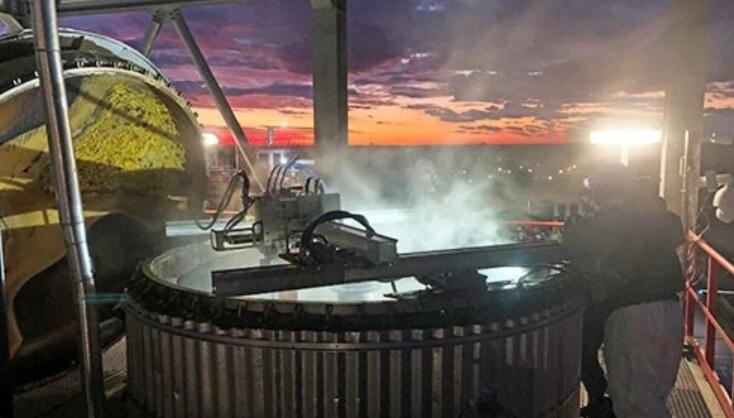
Custom-Designed Equipment
For cleaning operations requiring pressures between 10,000 and 40,000 psi, experienced operators equipped with the right pumps can rapidly restore operational equipment to full production capacity and peak efficiency.
Custom-designed nozzles, specialized tools, and automated application equipment-paired with diesel-powered pumps-deliver unparalleled speed, efficiency, and safety.
What Is High-Pressure Water Jetting? High-flow hydro-jetting, as the name implies, is a process that delivers high-pressure water at a high flow rate-achieved through the use of custom-designed, high-capacity pumps (often referred to as "large pumps").
These high-capacity pumps-capable of delivering up to 2,250 horsepower, flow rates of 1,200 gallons per minute, and pressures of 10,000 psi-combined with skilled personnel and automated equipment, allow for the safe and efficient execution of even the most demanding cleaning projects, thereby reducing costs and eliminating downtime.
Industrial equipment can accumulate scale, sediments, process residues, and other deposits, all of which hinder inspection and maintenance.
High-pressure water jetting is an effective method for certain industrial cleaning applications, as it utilizes high-pressure water streams to remove such accumulations from equipment and surfaces.
High-pressure water jetting should not be viewed merely as a cleaning task. Facilities must also account for factors such as worker safety, containment, wastewater management, the handling of removed materials, and final waste disposal.
When to Use High-Pressure Water Jetting
Hydro-jetting can be applied across a wide range of industrial maintenance areas. Depending on the equipment and site conditions, it can be used to clean storage tanks, process equipment, piping, drainage systems, and various other surfaces.
The appropriate pressure and cleaning method depend on the specific material being removed and the equipment being cleaned. An on-site assessment helps determine whether high-pressure water jetting is suitable for a given application.
Planning for Material Removal
One of the most critical considerations is how to manage materials once they have been removed. High-pressure water jetting dislodges accumulated residues, oils, sludge, scale, and other substances, all of which must subsequently be collected and processed.
Before work begins, facilities should establish plans for isolation, collection points, temporary storage, sampling requirements, and the final disposition of the removed materials.
Wastewater and Disposal Considerations
Water used during the cleaning process may enter the waste stream. Facilities must prevent uncontrolled discharges and implement proper collection and treatment procedures.
Depending on the characteristics of the water and the materials removed, additional evaluation may be required prior to handling, transport, discharge, or final disposal.